Part two · What happened next Fiction
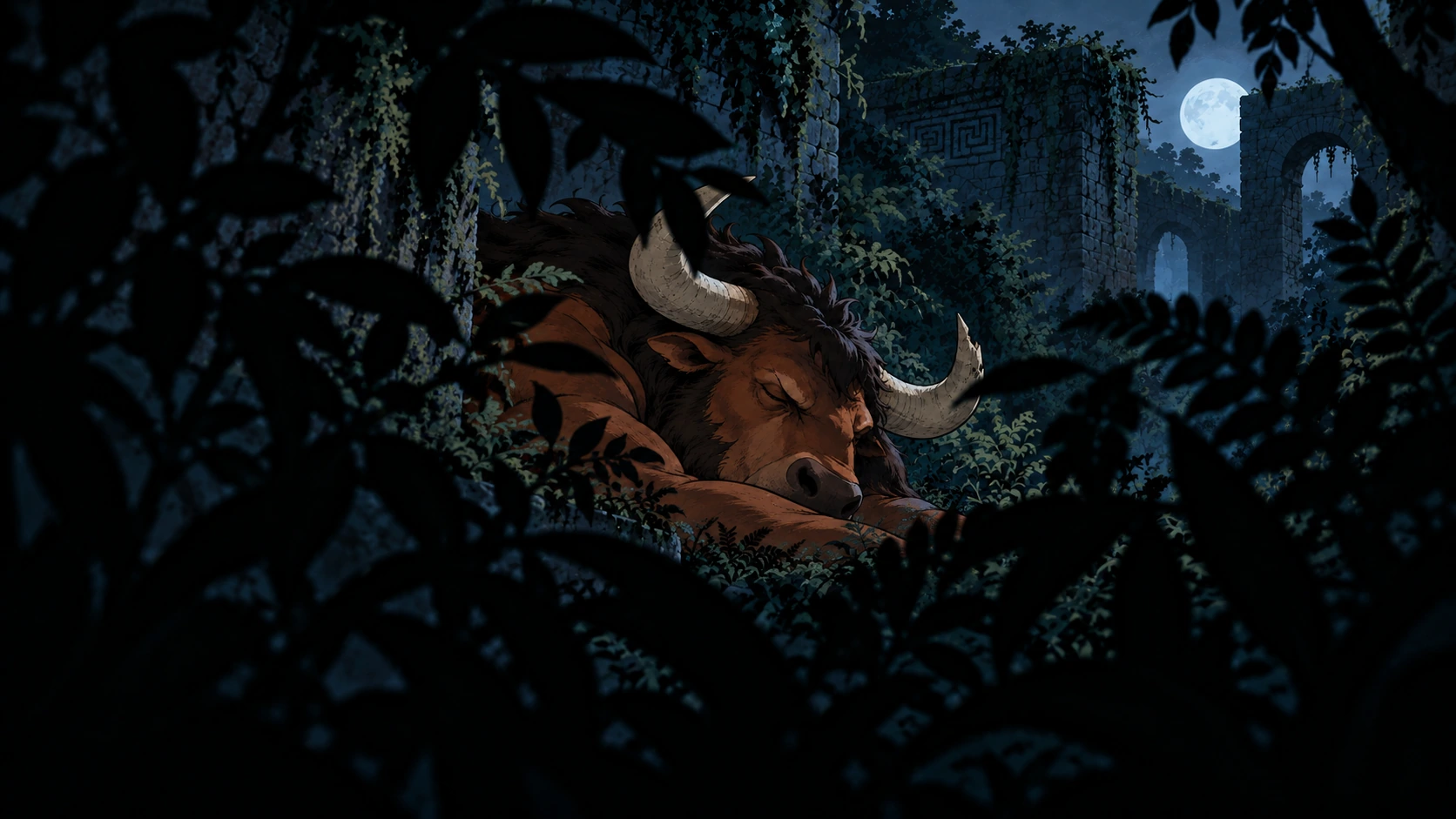
Nobody checked downstairs.
At first, he counted the footsteps.
Builders came with ropes, lamps, and arguments about which way the corridors should turn. They carved a name above the entrance. They made the walls thick. They called it a place for keeping things safe.
The bull liked that part. He had never been much of a talker. Give him a wall to lean against, something worth guarding, and a quiet corner: that was enough.
So he stayed.
Above him, the world became very loud. People arrived carrying flags. Others arrived carrying predictions. Everyone had a map; none of the maps agreed. Every so often, someone stood at the entrance and announced that the whole place was finished.
He could hear them through the stone.
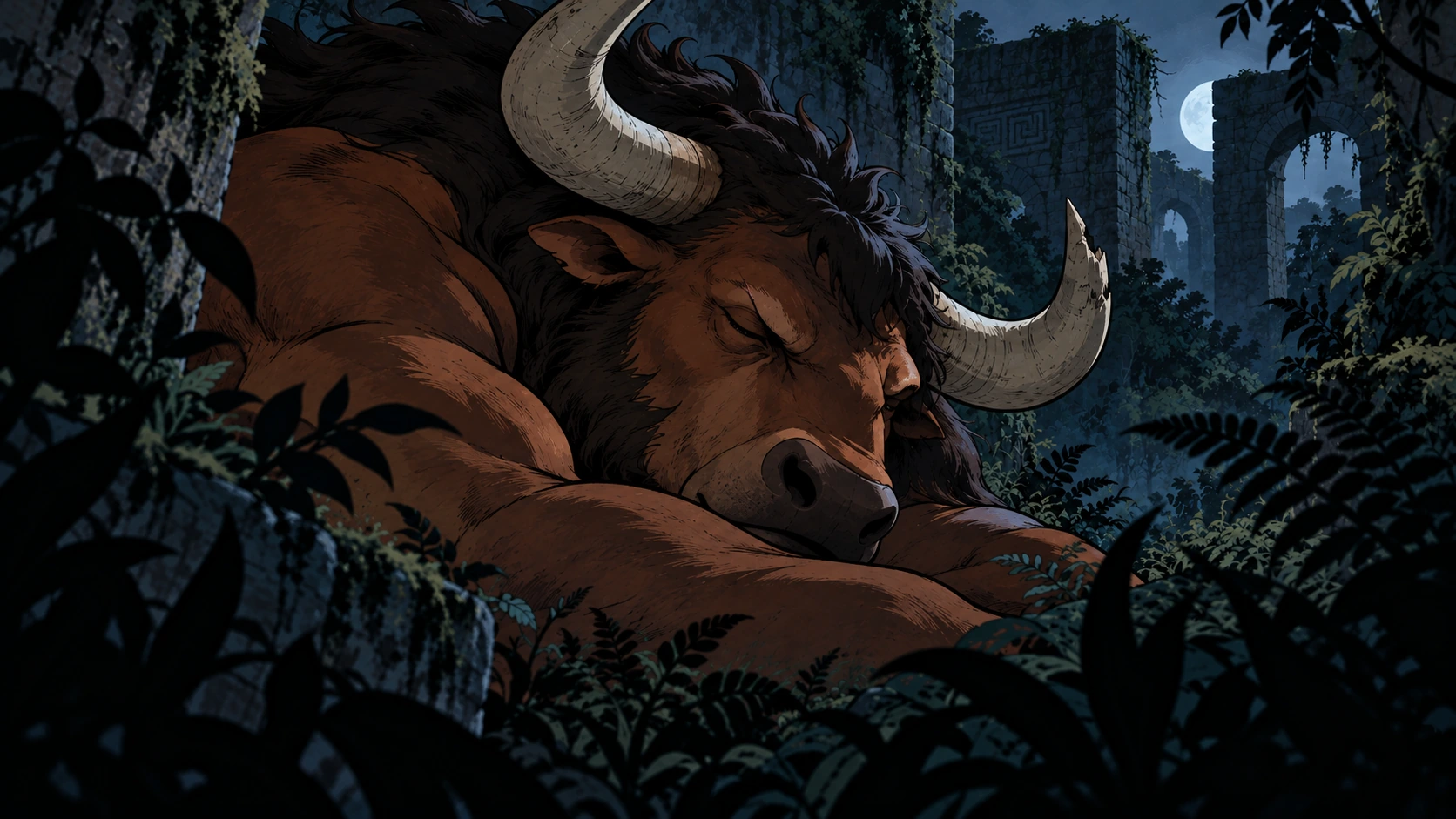
Then the noise faded. Rain gathered in the open courtyards. Ferns grew between the steps. A root worked its way through the ceiling, very slowly, and touched his shoulder. He moved six inches to the left and went back to sleep.
That was the thing about the beast: he did not know what a cycle was. He knew winter. He knew the smell of wet earth. He knew that stone could hold warmth long after the sun had gone.
One night, something small slipped through the cracks. A snake, bright-eyed and entirely too pleased with itself. It climbed over his wrist, crossed his chest, and settled between the horns.
“You know there’s a door, right?”
The bull opened one eye.
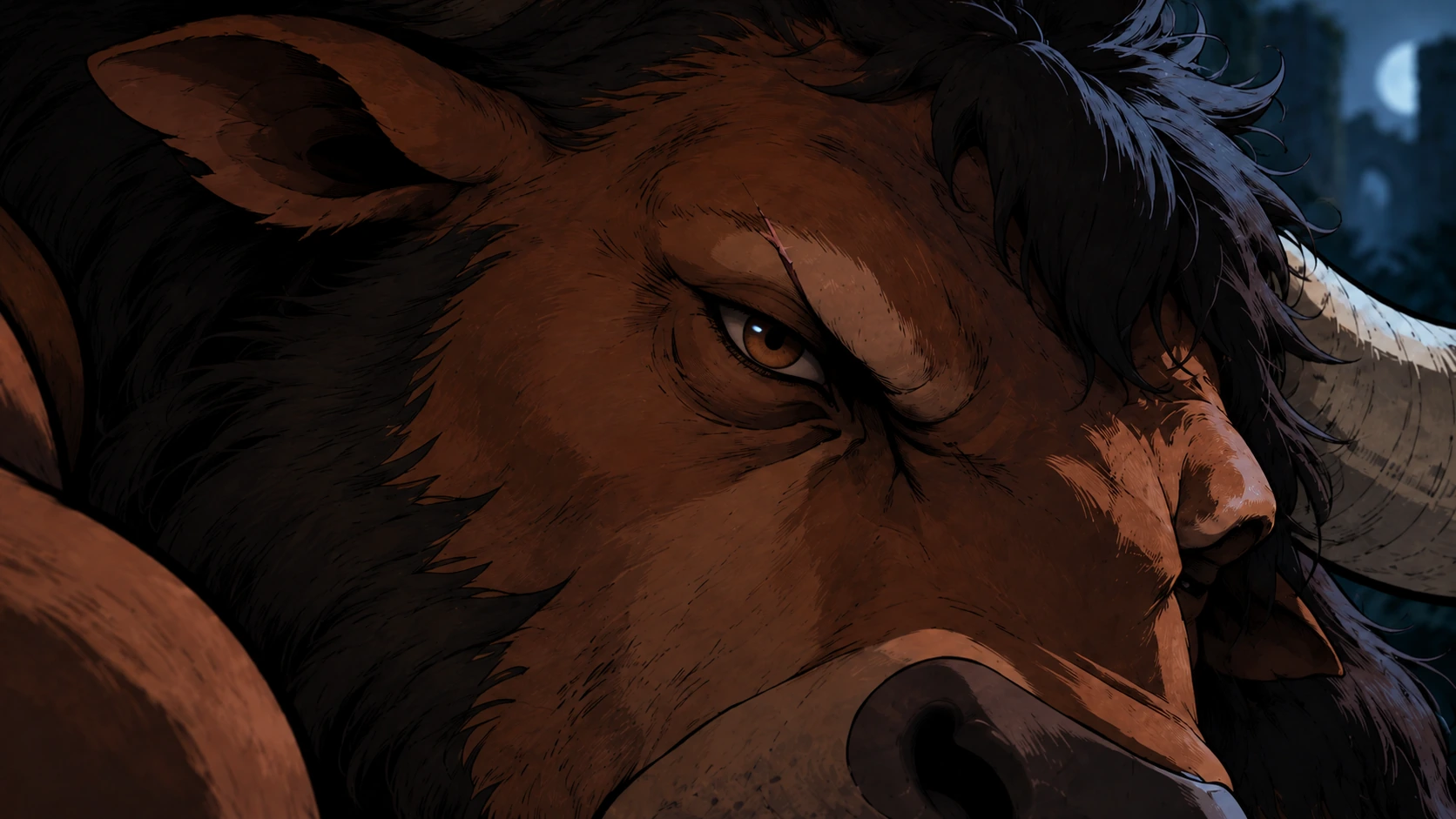
He had spent so long guarding the maze that he had forgotten the maze was not the world.
By morning, he was standing. Dust fell from his mane. The stone beneath his hand gave a tired little crack. Beyond the arch, there were voices again. Not builders this time. People laughing. Someone was making coffee.
He tried the doorway.
The horns caught.
For a moment, the most ancient thing in the labyrinth stood there, stuck, looking deeply disappointed in architecture.
Then he turned his head sideways.

The first step outside was smaller than anyone expected. No prophecy. No speech. Just a bull, blinking at the daylight, wondering where the coffee had gone.
He had been here the whole time.
Now everyone else would know.